Tesla Delays Optimus Humanoid Robot Launch to Late 2027
Tesla has pushed back the launch of its Optimus humanoid robot to late 2027, citing unresolved issues with hand durability and AI generalization that mirror challenges faced by competitors like XPeng and Boston Dynamics.
By Jennifer Paige ·
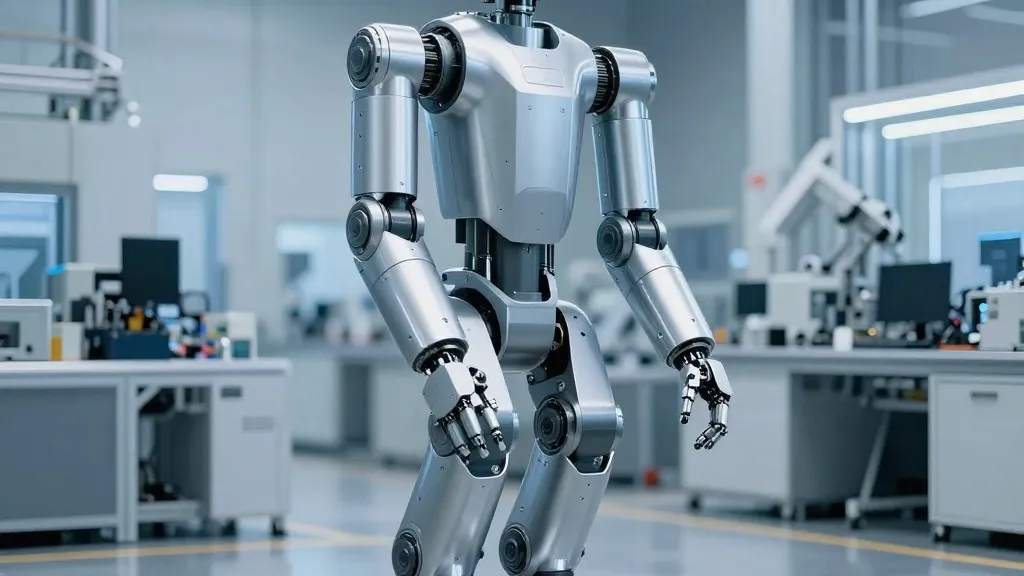
The global race to deploy general-purpose humanoid robots has intensified as major manufacturers grapple with persistent hardware and software hurdles. On October 22, 2026, Tesla confirmed that it will not begin delivering its Optimus robots to external customers until the end of 2027, a significant shift from earlier projections that targeted widespread availability by 2026.
During the third-quarter earnings call, CEO Elon Musk outlined the specific bottlenecks delaying the rollout. The company has installed most of the manufacturing line in Fremont, California, a facility designed to eventually produce one million units annually. However, Musk acknowledged that reaching a production rate of 20,000 robots per week will require at least another year, potentially longer, due to ongoing design modifications. He identified the AI architecture, electromechanical design, and overall durability as the primary areas requiring resolution before the end of next year.
The most critical hardware challenge, according to Tesla engineers, remains the robot’s hands. Musk explained that the fingers must be soft enough to handle delicate objects yet durable enough to withstand constant industrial wear, a difficulty compounded by the fact that robots cannot regenerate skin like humans. To address the lack of a large data collection fleet similar to its autonomous vehicles, Tesla plans to manufacture between 10,000 and 20,000 units for an internal "Optimus Academy" where the robots will practice tasks. The company also intends to integrate its AI5 chip into the robots around April 2027.
Musk stated that Tesla’s competitors are not yet close to matching its progress, yet industry rivals have made substantial strides. XPeng, a Chinese automaker, activated an automated production line for its IRON robot in September, with 80% of core processes already automated. XPeng aims for mass production by the end of 2026 and customer deliveries in the first half of 2027, starting with retail environments. Meanwhile, Hyundai’s Boston Dynamics began producing its electric Atlas robot in January and has committed all 2026 deployments, including a partnership with Google DeepMind.
Boston Dynamics has adopted a pragmatic approach to the hand-dexterity problem by prioritizing sturdy industrial grippers over human-like dexterity. The company opened a training center at Hyundai’s Metaplant in Georgia, where Atlas units are learning to sequence car parts for assembly lines. Hyundai plans to deploy 25,000 robots across its facilities in the coming years. This contrasts with Tesla’s previous timeline, which saw internal use promised for 2025 and external high-volume delivery for 2026, targets that were ultimately missed.
The stakes for these manufacturers are high as they seek to replace human labor in dangerous, repetitive, or 24/7 industrial roles. Tesla’s Q3 shareholder letter noted that current units from the Fremont line are the first to meet production-quality standards, implying that previous iterations were prototypes. While Tesla may build the most robots, competitors have demonstrated comparable or advanced automation levels, suggesting that the challenge of creating truly useful, generalized robotic labor remains unsolved across the industry.
Investors and analysts are watching closely as Tesla prepares to release a video within the next month showing Optimus performing unscripted tasks. If successful, it would validate the late-2027 delivery target; if not, it may further erode confidence in the timeline. The consensus among industry observers is that while Tesla leads in volume, the true measure of success lies in reliability and generalization, areas where no manufacturer has yet achieved a definitive breakthrough.
Source: Electrek